
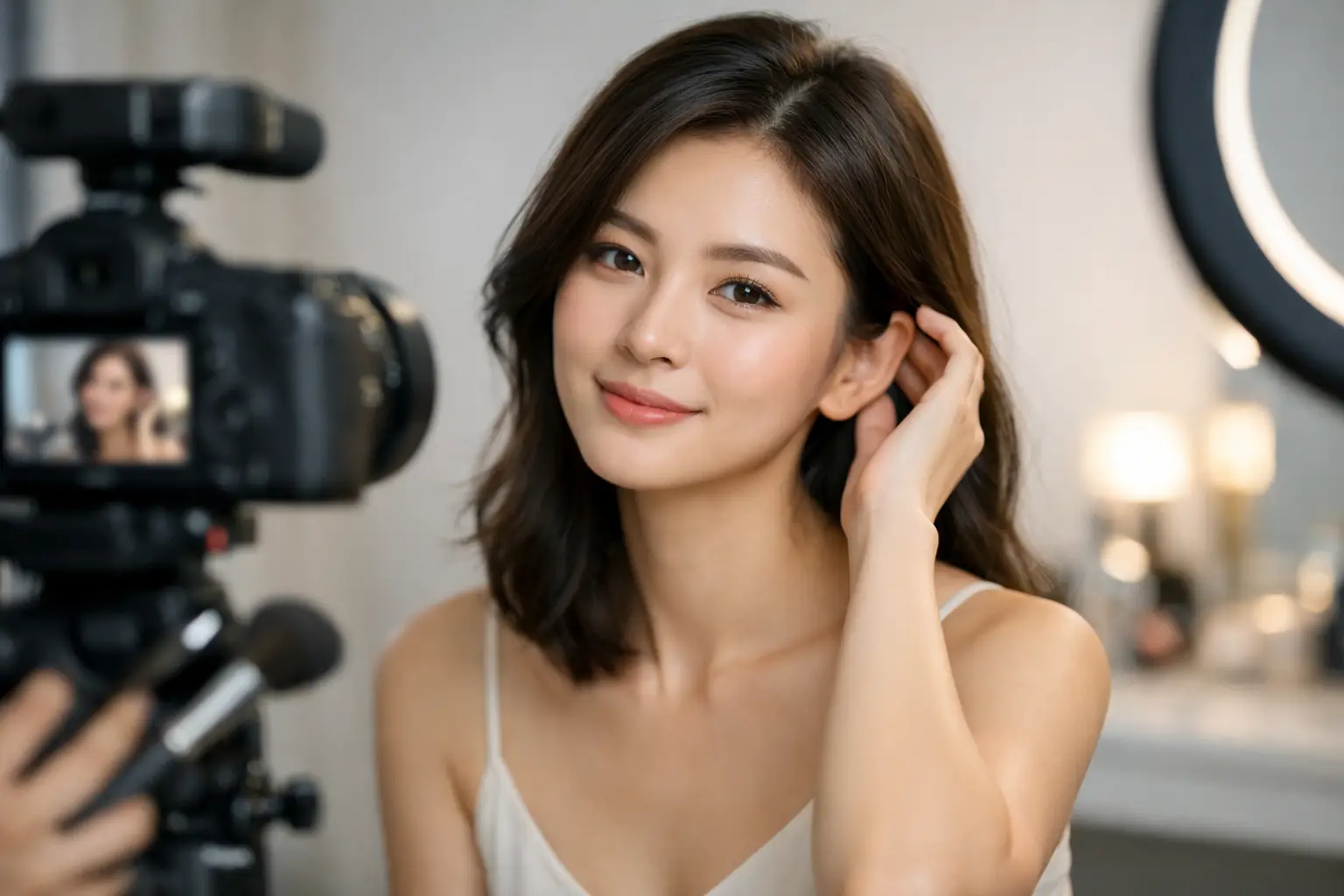
Yes – makeup can look natural on camera, but it has to be designed for the lens, not just for the mirror. The most flattering results come from careful skin prep, thin layers, balanced definition and products that hold up under daylight, flash and humidity without looking heavy.
If you have ever thought, “I want to look polished, but still like myself,” you are asking exactly the right question. Can makeup look natural on camera? Absolutely. But natural on camera does not mean no makeup. It means makeup that disappears into the skin, keeps your features in proportion and reads fresh in photographs from every angle.
Why does makeup look heavier on camera than in real life?
The camera is far less forgiving than your bathroom mirror. It flattens dimension, catches texture, and reacts differently depending on whether you are standing in soft daylight, a hotel suite, a registry office, or under strong ballroom flash. Makeup that seems subtle up close can suddenly read dense if the base is too thick or the powders are overused.
This is where many people get caught out. They hear they need “more” for photography, so they add extra foundation, extra concealer and extra contour. The result may photograph as a visible layer rather than skin. On the other hand, wearing too little structure can leave the face looking washed out in professional images.
The answer is balance. For bridal makeup, ROM ceremonies and actual day weddings especially, the goal is not maximum coverage. It is strategic coverage. You want enough definition for the camera to register your features, but not so much that your skin loses life.
Can makeup look natural on camera in bright daylight and flash?
Yes, but the products and technique need to work in both conditions. This matters more than most people realise because weddings and formal events rarely happen under one type of light. You might start with soft morning light, move into harsher midday brightness, then finish in a ballroom where flash photography changes everything.
A natural-looking camera base usually starts with skin preparation rather than foundation. When skin is well moisturised, soothed and properly primed, less complexion product is needed. That is especially important in Singapore, where heat and humidity can break down makeup and cause patchiness around the nose, mouth and chin.
The most reliable approach is to build in very fine layers. A sheer to medium base, spot-concealed where needed, tends to look more believable than full coverage spread evenly across the entire face. Cream textures often help preserve a skin-like finish, while selective powdering keeps shine under control without flattening the complexion.
Flash is another issue. Some powders and sunscreens can bounce light back and create a pale cast in photographs. This is why zero-flashback product selection matters. If your makeup artist understands how formulas behave under professional photography, the skin can stay clean and dimensional instead of chalky.
What makes bridal makeup look natural on camera?
For brides, natural on camera is not one fixed style. A ROM look, for example, is often lighter, fresher and a little more effortless because the setting is intimate and often photographed in daylight. An actual day bridal look usually needs stronger longevity and a touch more structure, because there may be multiple outfit changes, emotional moments, family photos, sweat, hugging, tears and evening flash.
What stays consistent is refinement. Skin should look even but not masked. Brows should frame the face without looking stamped on. Eyes should appear brighter and more defined, but not so dark that they overpower the features. Lips should hold shape and colour, while still looking soft.
For a Korean bridal style, this often means a clean glow, softly lifted brows, delicate aegyo sal placement and blurred lips that create freshness rather than drama. The challenge is making that glow climate-proof. Mirror skin can be beautiful on camera, but only if it is controlled. Too much slip, and the face can read greasy under heat and flash. The finish needs to be luminous in the right places and anchored where longevity matters.
For Chinese bridal looks, especially with Qun Kua or more formal evening gowns, the makeup may need slightly more sculpted elegance. That does not mean heaviness. It means thoughtful lash mapping, discreet contour placement and enough definition to complement richer fabrics, jewellery and stronger lighting setups.
How should natural camera makeup be applied?
Technique matters more than product quantity. The face should be built in a way that keeps movement and skin texture visible.
A strong application usually follows this logic:
- Prep the skin thoroughly so foundation sits smoothly rather than gripping dry patches or sliding on excess oil.
- Use thin, flexible layers of base and conceal only where the skin tone needs evening out.
- Add dimension back with cream blush, soft contour or bronzing, then set only the areas that need control.
- Define the eyes in a way that opens them on camera without creating a hard stripe of liner or a blocky lash line.
- Choose lip colours that support the overall tone of the face and outfit rather than competing with it.
There is always a trade-off. The more matte the skin, the longer it may last, but the less fresh it can appear. The more radiant the skin, the more youthful and modern it may look, but the more carefully it must be managed throughout the day. A good artist adjusts the finish according to your skin type, the event timeline and the photography conditions.
Which mistakes stop makeup looking natural on camera?
Most camera-makeup mistakes come from overcorrection. People try to erase every pore, every bit of redness and every sign of shine. Ironically, that is what makes the makeup visible.
The most common problems are:
- Foundation that is too full coverage or too matte for the skin type
- Concealer piled heavily under the eyes, which can crease and catch flash
- Brows that are too dark or too sharply outlined
- Contour that looks obvious in person and muddy in photographs
- High SPF or silica-heavy products that create flashback
- Powder layered repeatedly until the skin looks dry and flat
- Lashes that are too dense for the eye shape, making the eyes look smaller
Another issue is mismatched styling. If the makeup is soft and natural but the hair is too severe, or the dress is highly structured and the face has no definition, the overall result can feel off. Camera-ready beauty works best when hair, makeup, outfit and lighting are considered together.
Does natural makeup still work for corporate events and photoshoots?
Very much so. In fact, for corporate headshots, dinner-and-dance events and private shoots, natural makeup often performs better than heavier glamour because it keeps the focus on expression. You look rested, polished and credible rather than overdone.
The difference is in the emphasis. Corporate makeup may need more under-eye brightening, tidy skin correction and clean lash definition so the face reads alert on camera. Event makeup may call for a little more warmth and durability if you will be under changing lights for hours. Private photoshoots sometimes allow for more editorial shaping, but even then, the most elegant results still respect your features.
That is very much the philosophy at VictoriaHan Makeup Studio – clean, fresh, natural beauty with enough technical precision to hold up under real conditions.
What should you ask for if you want natural makeup on camera?
Be specific about the outcome, not just the style name. Saying “natural” can mean ten different things to ten different people. A better brief is to explain how you want your skin to look, how much definition you are comfortable with, and where the makeup needs to last.
Helpful things to mention include your skin type, whether you cry easily, if you usually dislike the feeling of foundation, and whether your event moves from daylight to flash photography. Reference photos can help, but they should be used as direction rather than strict templates. The best result is one that suits your face, your outfit and your schedule.
If you are a minimal makeup wearer, say so. If you want a Korean-inspired finish but are worried about shine, say that too. If you need to look elegant in a ballroom but still soft in close-up portraits, that is exactly the kind of detail that changes product choices and application.
FAQs
Can makeup look natural on camera if I have acne or texture?
Yes. The key is not to smother the skin. Careful prep, precise concealing and lightweight layering usually photograph better than heavy full-face coverage.
Should I choose a trial before my wedding or ROM?
Yes, especially if you are particular about looking like yourself. A trial helps fine-tune skin finish, lash style, lip tone and how the makeup wears over time.
Do I need hair extensions for camera-ready bridal styling?
Not always. Extensions help if you want more fullness, length or stronger shape retention, but many styles can be customised beautifully without them.
Is there usually a morning surcharge for very early bridal call times?
Often, yes. Early starts are common for weddings, so it is worth checking this in advance when reviewing your quote and timeline.
Will natural makeup last in humidity?
It can, if the skin is prepped properly and the products are chosen for heat, sweat and flash. Longevity comes from layering well, not applying more.
When makeup is done properly, the camera does not see a mask. It sees healthy skin, bright eyes and a version of you that feels calm, refined and recognisable. If that is the result you want for your wedding, event or shoot, book an appointment with Victoria Han Studio and let the planning start from there.